

Source: Zman Yisrael (Israel Time)
By Pinhas Inbari
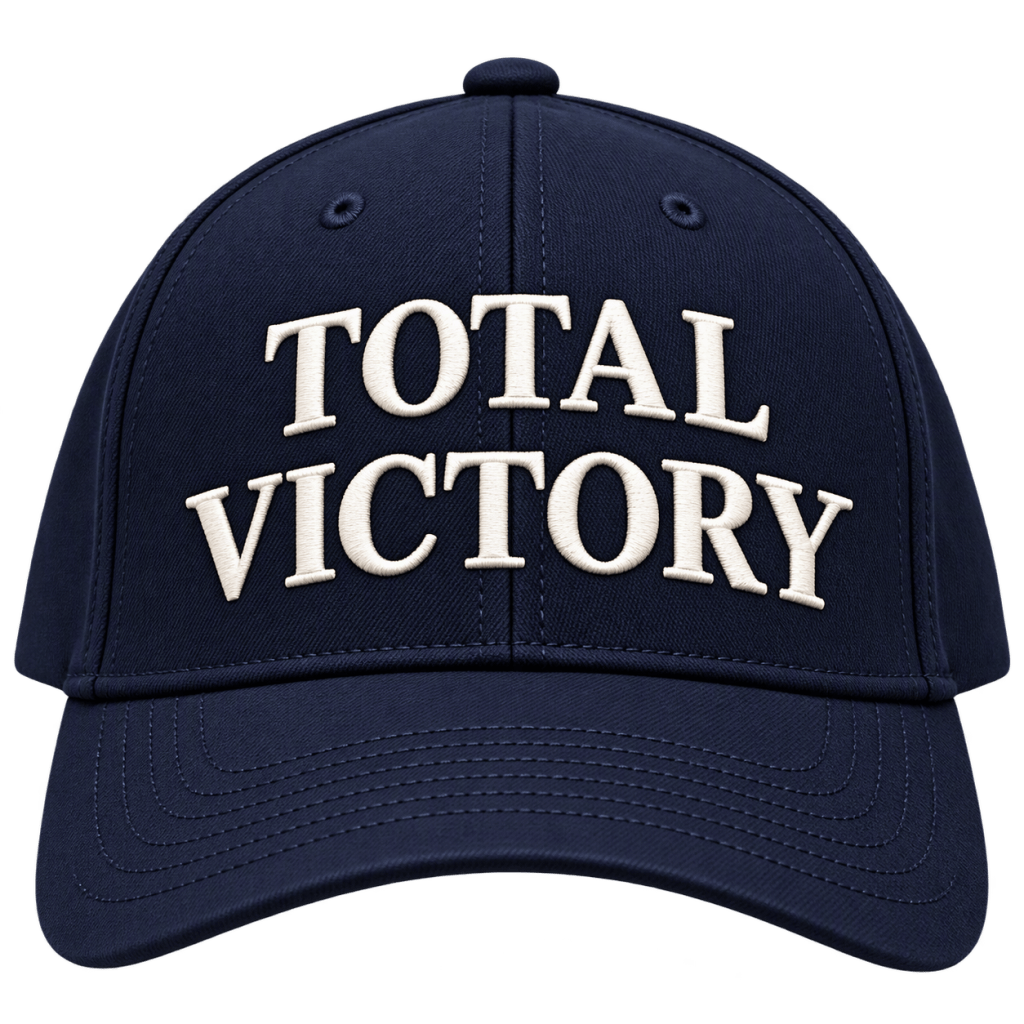
One of Israel’s chronic ills is the replacement of orderly strategic thinking with election slogans. First the slogan is produced, and then policy is derived from it. We saw this in the Gaza war, when the army was required to adapt itself to the slogan of “total victory” and all the rest of it.
The father of the doctrine of slogans is outgoing Prime Minister Benjamin Netanyahu, whose entire being is one big election campaign.
Now, after the great success of the Arab voter in the Knesset elections – a success that cemented the Arab voter’s central place in the new Israel – Netanyahu has launched the “Muslim Brotherhood” campaign. To this campaign he adds another element of consciousness engineering: fear-mongering.
The father of the doctrine of slogans is Netanyahu, whose entire being is an election campaign. Now, after the Arab voter’s success in the elections cemented his central place, Netanyahu has launched the “Muslim Brotherhood” campaign – with fear added to the mix
Netanyahu is building a frightening monster, as if the Arab parties were Muslim Brotherhood parties seeking to turn Israel’s streets into mayhem, just as the Muslim Brotherhood turned the streets of France into chaos. And in the updated version of the spin: comparing the emerging coalition to the “Red-Green” alliance in Europe – the alliance between the Muslim Brotherhood and the radical left.
Ironically, when one examines the state of the Muslim Brotherhood in the Middle East, in Europe, and now in the United States as well, there is no escaping the conclusion that it is precisely the outgoing government that is closer to the Muslim Brotherhood than the Arab parties are. Mayhem in the streets? The call is coming from Qatargate, not from the Arabs.
Unfortunately, the change bloc has been dragged along by this engineering. Among the four principles Gadi Eisenkot set out for his partners in government is the demand to recognize Hamas as a terrorist organization whose military and governing power in the Strip must be destroyed.
This reflects a lack of understanding of the processes underway in Arab society in Israel, which is disengaging from Palestinian identity and connecting to Israeliness. The moment we demand that it take a position on Hamas, we throw it back into the arms of Palestinian identity.
It is to be hoped that as negotiations to form the new government continue, we will break free once and for all of Netanyahu’s narratives, gimmicks and shticks, and return to thinking strategically. Detaching Israel’s Arabs from Palestinian identity is the correct strategic thinking, whereas being dragged along by Netanyahu’s slogans pushes them back there.
There is a lack of understanding of the processes in Arab society in Israel, which is disengaging from Palestinian identity and connecting to Israeliness. The moment we demand that it take a position on Hamas, we throw it back into the arms of Palestinian identity
What Is the Muslim Brotherhood?
The Muslim Brotherhood is a political Islam movement whose aim is first to Islamize the Arab world under sharia law, then to revive the glorious Muslim caliphate and conquer the entire world. Its founder, Hassan al-Banna, who established the movement in Ismailia, Egypt, in 1928, laid the foundations for both of its arms – the social-political and the jihadist.
Therefore, both the parts of the movement that seek to focus on da’wa – that is, social, outreach and educational activity – and those that prefer war, that is, terrorism, can find support in the teachings of Hassan al-Banna and the founding generation.
The two powers that support the Muslim Brotherhood are Qatar and Turkey, and one can identify the Brotherhood’s movements in the Middle East and around the world by who eats at their table. Whoever receives aid from Qatar and takes part in the movement’s conferences in Istanbul is an organic part of the movement; whoever is absent from them does not belong to it.
In Israel the picture is clear. The Northern Branch of the Islamic Movement, headed by Sheikh Raed Salah, is part of the regional structure of Turkey and Qatar. Mansour Abbas’s Ra’am party is absent from all these frameworks, and is therefore not part of them. In December 2025, Abbas even announced that his party was cutting its ties with the Shura Council of the Southern Islamic Movement.
If Israel is not to be in contact with Qatar, then with whom can it be? With the enemies of the Muslim Brotherhood in the Arab world, chief among them Saudi Arabia, Egypt and Jordan. Qatar’s goal is clear: to sow anarchy in the Middle East in order to topple the non-Islamist regimes and establish an Islamic caliphate governed by sharia law.
The powers supporting the Muslim Brotherhood are Qatar and Turkey. The Brotherhood’s movements in the Middle East and the world can be identified by who eats at their table – who receives aid from Qatar and attends the movement’s conferences in Istanbul
At the same time, Qatar encourages the “Red-Green” alliance in Europe, in which a foolish radical left joins forces with radical Islamists to sow anarchy on the continent as a step toward an Islamic takeover.
Netanyahu, in his latest spin, has supposedly linked Yair Golan and Mansour Abbas to Europe’s Red-Green alliance. To refute the spin, the obvious must be stated: Yair Golan is not a European “Red,” and Mansour Abbas is not “Muslim Brotherhood.” He is tied neither to Qatar nor to Turkey. The connection to Qatar – and from there to Turkey – lies in the Prime Minister’s Office.
Qatari Anarchy – in the Name of Judaism
Once you peel away all the layers of spin wrapped around Netanyahu’s outgoing government, a fact check shows that it is precisely this government that meets the criteria of Qatari anarchy – not in the name of Islam, but in the name of Judaism.
A religious takeover of a secular state? In Israel too – and in the shadow of the Qatargate affair, in which associates of the Prime Minister are suspected of having worked in Qatar’s service at the heart of his office. Anarchy in the streets? In Israel too. Where does it come from? From the very office under suspicion in the Qatargate affair.
And in a cold analysis of the diplomatic reality: Qatar and Turkey have gained a foothold in the “Board of Peace” for Gaza, despite Israel’s declared opposition. That opposition looks more like verbal spin, since in practice Israel rejected the Egyptian plan for Gaza – which won Saudi backing and the backing of the Arab League – and thereby prevented the enemies of the Muslim Brotherhood, led by Egypt and Saudi Arabia, from leading the arena. In other words, it cleared the way for Qatar and Turkey.
In practice, Israel rejected the Egyptian plan for Gaza – which won Saudi and Arab League backing – prevented the enemies of the Muslim Brotherhood, led by Egypt and Saudi Arabia, from leading the arena, and cleared the way for Qatar and Turkey
Turkey is already in Gaza, through its aid agencies. How did it get in? By sea? Through the tunnels? Perhaps via the Mefalsim crossing?
After Israel pushed Turkey’s presence out of East Jerusalem, here it has reappeared there. How?
The link between Israel and Qatar, and through Qatar to Turkey’s Muslim Brotherhood, carries a very dangerous implication for Israel’s natural gas alliance with Egypt, the UAE, Cyprus and Greece – Turkey’s rivals. Because of Israel’s policy in Gaza, Turkey may end up with the Gaza port, thereby endangering the natural gas alliance that binds these allies together.
This is precisely the context of the visit by Tony Blair, one of the senior figures on US President Donald Trump’s “Board of Peace,” in the midst of President Herzog’s coalition consultations. Blair met with President Isaac Herzog between rounds of consultations, as well as with Netanyahu and Gadi Eisenkot, to advance Trump’s plan for Gaza – the entry of the technocratic committee into the Strip and the establishment of the International Stabilization Force.
The timing is no coincidence: Washington wants to sharpen its message that it expects a government in Israel that can take part in Gaza’s reconstruction rather than obstruct it. According to reports from Washington, Trump does not want to see Itamar Ben Gvir and Bezalel Smotrich in Israel’s new government.
Israel–Qatar ties, and through them Turkey’s Muslim Brotherhood, carry a dangerous implication for the natural gas alliance between Israel and Egypt, the UAE, Cyprus and Greece – Turkey’s rivals. Because of Israel’s Gaza policy, Turkey could end up with the Gaza port
And there is one more detail that shows who is obstructing whom. According to Palestinian sources, Hamas collected more than a thousand weapons and sought to hand them over to Gaza’s technocratic committee – but Israel did not allow the transfer. The committee itself is still waiting outside the Strip, because Israel will not allow it in, and its entry is one of the issues Blair came to promote.
And behind Gaza looms a bigger question: where the energy of the Arabian Peninsula will flow. Turkey is promoting a gas pipeline from Qatar through Syria, while trade routes from the Gulf to Europe via Jordan and Syria are also being examined – routes that bypass Israel and the India–Middle East–Europe Economic Corridor (IMEC).
A government that takes part in Gaza’s reconstruction could restore Israel to the center of the corridor and route the energy of the Arabian Peninsula through it. A government that remains shackled to spin will leave the arena to Syria under Turkish patronage.
Ra’am Is the Opposite
The Muslim Brotherhood is an antisemitic movement that hates Israel and Jews and permits jihad by means of suicide attacks against Jews. Mansour Abbas’s Ra’am is the opposite of all these messages: it recognizes Israel, and its members swear allegiance to the state in the Knesset, beneath the Israeli flag and the portrait of Theodor Herzl.
A government that takes part in Gaza’s reconstruction could restore Israel to the center of the energy corridor and route the energy of the Arabian Peninsula through it. A government that remains shackled to spin will leave the arena to Syria under Turkish patronage
The real Muslim Brotherhood movement – that of Sheikh Raed Salah – boycotts the elections precisely because of such scenes. It was outlawed back in 2015, and rightly so.
Netanyahu manages to get his spin across because he has dumbed down the public. Rebuilding education must be one of the main goals of the “Government of Repair,” so that Israel can return to the path of an advanced, thinking country that is not tossed about between spin and empty slogans.
Liberman, the Haredim and Ra’am
Avigdor Liberman’s resounding breach of his election promise not to include the Haredim opens the door for Eisenkot to include Ra’am in his government as well. Liberman cannot both break an election promise and obstruct Eisenkot; that would finish his career.
In every past Knesset there has been cooperation between the Haredim and the Arab parties, and there is no reason it should not continue in the incoming Knesset. Whoever is willing to sit with the Haredim after promising to exclude them cannot disqualify Ra’am, which has nothing whatsoever to do with the Muslim Brotherhood.
Liberman’s resounding breach of his election promise opens the door for Eisenkot to include Ra’am in his government as well. Whoever is willing to sit with the Haredim after promising to exclude them cannot disqualify Ra’am, which has nothing to do with the Muslim Brotherhood
The real question is not who sits with whom, but whether the next government will have the wisdom to free itself from Netanyahu’s spin and return to thinking strategically – about Gaza, about Qatar, and about the place of Israel’s Arabs in the new Israel.
Pinhas Inbari is a senior Middle East researcher, journalist, author, screenwriter and poet. He wrote the entries on the Palestinians in the New Hebrew Encyclopedia and served for many years as a researcher at the Jerusalem Center for Public Affairs. He has written non-fiction books on the Palestinian question, as well as a linguistics book on the roots of the Hebrew language, “Sipur Shoresh” (The Story of a Root). The novels he co-wrote with his wife, Aviva, are “Al Gav Sufa” (On the Back of a Storm), about the challenges facing the Christian communities of the Western Galilee under the British Mandate in the face of radical Islam, and the status of women; and “Shomer HaShe’ol” (Guardian of Sheol), which deals with Israeli corruption.

