

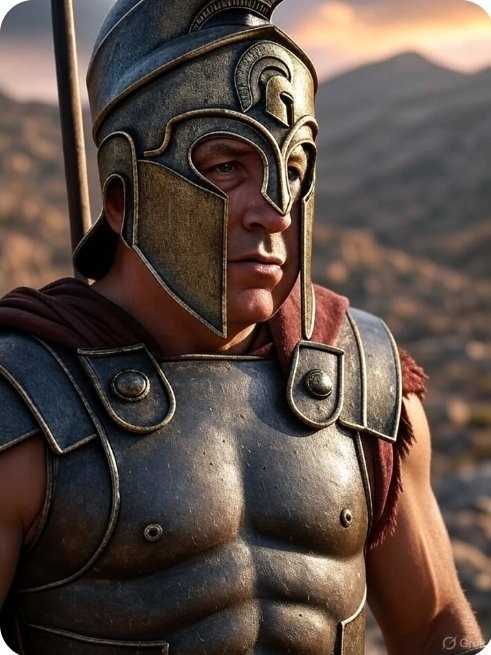
Bibi the Great
Remember when Iran's first attack on Israel saw the entire Middle East rally to Israel's defense? Saudi Arabia, the UAE, Jordan, the United States, and European nations all stood guard. The result was stunning—nearly zero damage to Israel and a severe moral blow to Iran. Jordan particularly distinguished itself, intercepting all projectiles that passed through its airspace.
That was then—no longer. Instead of leveraging this historic regional alignment into a remarkable Middle Eastern alliance, Netanyahu chose the synagogue on the Temple Mount that he promised Ben Gvir and Smotrich's "decisive plan." Saudi Arabia made it crystal clear—Netanyahu must choose between them and Ben Gvir and Smotrich. Netanyahu chose "his partners."

Bibi wood
Now, as Israelis compare how things were when the Middle East united around us versus now, when Ben Gvir and Smotrich unite around Netanyahu, the preference for a regional alliance—which should have been self-evident, a cornerstone for leveraging the new regional order with Israel and Saudi Arabia at its center—must be understood even more clearly today.
Netanyahu's decision to prefer Smotrich and Ben Gvir was certainly legitimate, but not logical, and this alone demands an examination of his fitness to serve as Prime Minister during these decisive days.
It turns out that even in these days, Netanyahu devotes considerable time to his image studios—because image is above all—and he releases photos that must raise questions about his capability, such as: Netanyahu as Alexander the Great conquering Iran, and Netanyahu personally directing aircraft on their sorties to Iran.
Naturally, when Saudi Arabia sees what kind of leader Israel has in these days, they must look out for themselves, and they made the move befitting their interests—they drew closer to China, Iran, and Russia (thereby accelerating Trump's approach to them) and were among the first to condemn Israel. So instead of being with us, they're against us.
The Oil Infrastructure Dilemma
But Saudi Arabia remains a key state regarding the continuation of the war due to oil facility issues. Israel did not strike Iran's oil industry, without which Iran loses its economic foundation—and rightfully so. Attacking Iran's oil facilities would collapse it economically, but first it would strike Saudi oil and the Gulf states in general, throwing the entire global economy into chaos, including the American economy, in complete opposition to President Trump's policy. Therefore, I tended to assess that due to the inability to protect Saudi Arabia, Israel would not be able to launch an attack.
But since then, the United States has provided Saudi Arabia with a defence network that cannot compare to Israel's capabilities, but still. Despite Iran's strikes in the Tel Aviv area, with all the pain, they are still minor compared to the damage potential. Israel's success in the previous round was no less due to regional support, especially from Jordan, which we are pushing away from the Temple Mount because of a synagogue for Ben Gvir's rabbis.
Striking Iran's oil facilities could be no less a mortal blow to China, whose economy depends on Iranian oil. Therefore, one must assume China will intervene in the conflict to bring it to an end before it spills over into strikes on the oil industry.
The Religious Narrative Problem
But for this to happen, the confrontation between Israel and Iran must be rational. Israel's justification for launching a preventive war to stop Iranian nuclear development before it reaches a bomb belongs to the logical realm, but the narrative emerging from Israel and Iran is not logical but religious, raising concerns about the rationality of decision-making.
Alongside the biblical verses accompanying the Israeli narrative, Shiite religious scholars raised the red flag in Qom, symbolizing a religious war of revenge in the style of the Iran-Iraq war, which according to Shiite tradition was raised after the massacre of the Prophet's family in Karbala in the seventh century.
To add to the religious chaos, Erdogan jumped in, dreaming of renewing the Ottoman Caliphate, and instead of Turkey being ruler of the Middle East, he sees the Jews—who are supposed to be his protégés—as the regional masters.
A rational and non-religious government at this time? Let's not get carried away.
 פנחס ענברי - מזרח תיכון מסובך במילים פשוטות