

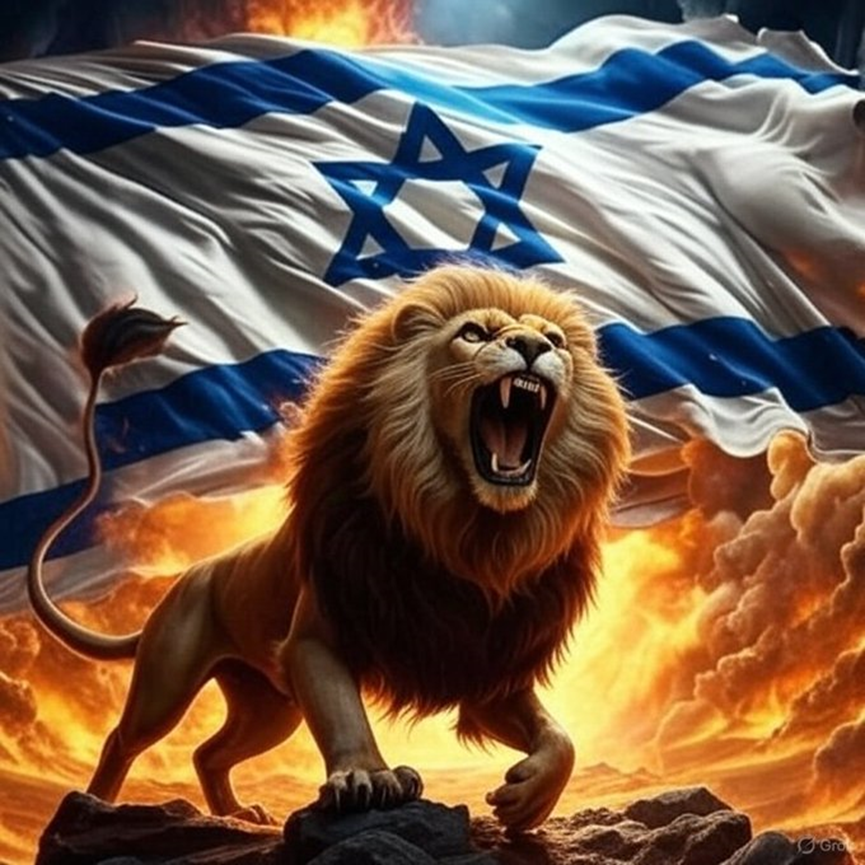
Israel and Iran have entered into war amid striking similarities in their internal situations that could significantly influence the nature of this conflict. In both confronting nations, large segments of the public have lost faith in their leadership, and both governments fear the domestic political ramifications of the war's outcome. Furthermore, in both Iran and Israel, major cities are protesting against their respective governments and regimes, while the religious and traditional periphery in both countries supports the establishment.
We can already observe how the Israeli government—more precisely, Netanyahu himself—has given deep consideration to the war narrative, designed to provide a sense of victory to the religious periphery while denying any credit to the urban elite that opposes the government.
Consequently, only when listening to Arab media outlets do we understand that it is the Air Force operating in Iran, not "our forces" or "the army" as described by ministers and government spokespersons. The most Netanyahu was willing to say was "our heroic pilots"—once and that's it—echoing the phrase "our lion heroes."
n Iran as well, the religious character of the war is manifested in the raising of the red flag over the
religious center of Qom, which symbolizes a Shiite religious war of vengeance for spilled blood
Just as the government seeks to unite the people—whom it has divided—behind a war of religious
verses, Iran aims to achieve the same goal. Both the Israeli government and the Iranian regime are fighting for internal survival, and this necessity could adversely affect future decision-making. In Israel, we also have the complication of a manipulative prime minister who wants to eliminate his trial, viewing any means as legitimate. After the Gaza war has exhausted itself, a war with Iran could serve as a suitable substitute.
I regret having to express this so bluntly. It's quite possible that the war with Iran is justified and appropriate, but this government and this prime minister have tainted all intentions, leaving us uncertain whom and what to believe.
A telling sign for the future trajectory of the war against Iran was Netanyahu's declaration that he would topple the ayatollahs and serve as the saviour of the Iranian people. This is exactly what the ayatollahs fear most—being overthrown—and thus Israel has transformed the war from a preventive conflict over Iran's nuclear program into an eternal war reminiscent of the Iran-Iraq War.
Despite the familiar rhetoric of Israeli unity, no one should doubt that all dictatorial moves will continue as if nothing has happened.
How do we know this? The "poison machine" continues spreading venom even at this hour.
The war's symbol is the heroic lion, accompanied by appropriate biblical verses about lions, but I'm not familiar with any lion that can fly, no matter how much it flexes its mighty muscles.
Had they wanted to find appropriate biblical verses, I would suggest this one, for example: "Like an eagle that stirs up its nest, hovers over its young, spreads its wings, takes them, and bears them on its pinions" (Deuteronomy 32:11).
The heroic lion motif, even in Air Force operations, continues the government's efforts to transform the IDF's character from a defence army to a Kahanist army.
Therefore, it's worth noting that Chief of Staff Lieutenant General Zamir distances himself from Netanyahu, and that the IDF spokesperson doesn't hesitate to explicitly name the forbidden name—the Air Force.
When both adversaries arm themselves with religious fervour, this does not bode well for what lies ahead.
 פנחס ענברי - מזרח תיכון מסובך במילים פשוטות