

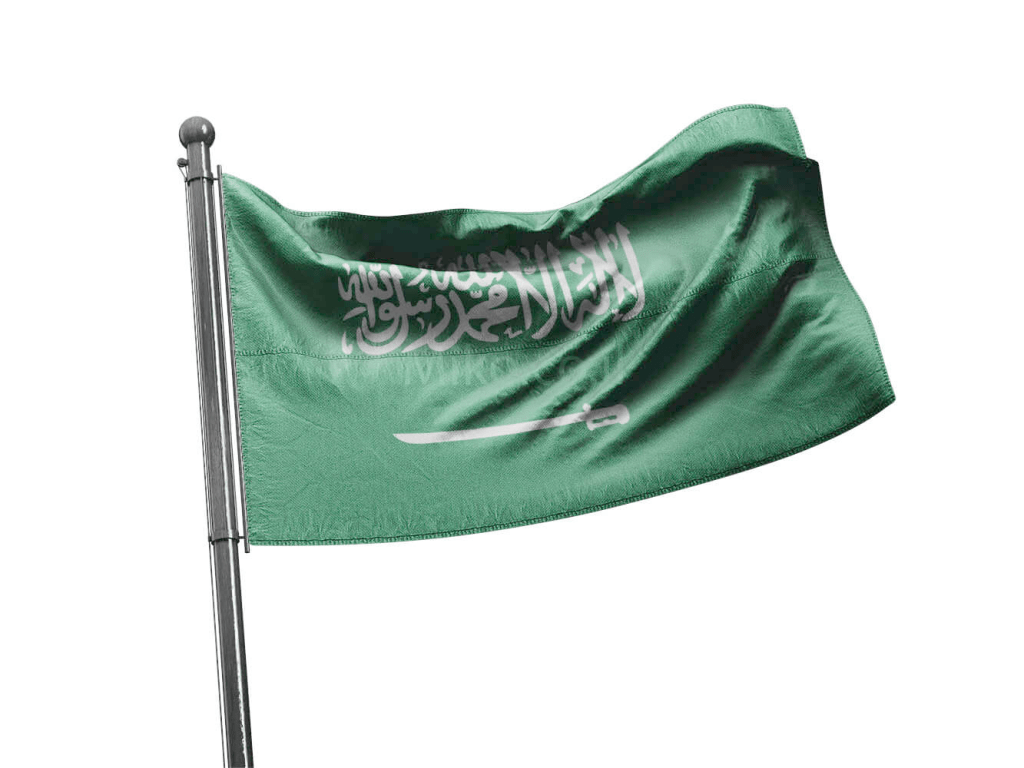
The drama unfolding in Israel comes against the backdrop of President Trump's planned visit to Saudi Arabia. Although there is no direct connection between these events, ultimately, when the United States seeks to establish an axis of pro-American countries in the Middle East, Netanyahu's ability to undermine this effort will be significantly diminished. This is because a shift from the Qatari axis to the Saudi axis threatens the stability of his government.
Why? Relying on Qatar does not obligate Netanyahu to make any commitments regarding the Palestinian issue. Qatar has no interest in resolving the Palestinian problem, as "the problem" provides quality footage for its incitement channel, Al Jazeera. Meanwhile, Saudi Arabia wants the opposite—to calm "the problem" in order to stabilize Arab regimes and thwart Qatar's efforts to promote Islamic turmoil in the Middle East and Europe.
It should be noted that recently, Jordanian intelligence uncovered a Muslim Brotherhood cell planning attacks within Jordan against the backdrop of the war in Gaza. There is reason to suspect that behind these plans stands Khaled Mashal, who was one of the architects of Abu Muhammad al-Julani's takeover in Syria, and whose eyes are now set on Jordan.
When discussing Saudi Arabia, we must also pay attention to Lebanon. Until the Israeli Air Force's major victory over Hezbollah and the Shiite Arc, Qatar was funding the Lebanese Army—in other words, preserving Hezbollah's influence over Lebanese politics. Now, Saudi money is pushing out Qatar's influence. Indeed, Qatar is the main source of funding for Julani in Syria, and it stands opposite Saudi Arabia in Lebanon, on the other side of the divide. One could say that in Syria and Lebanon, Saudi money is fighting Qatari money. In negotiations between Julani and Saudi Arabia and the Gulf states, what's at stake is Saudi-Emirati funding replacing Qatari money.
Lebanon's new president, Joseph Aoun, began his presidency with a visit to Riyadh. In recent days, he announced that only one weapon would exist in Lebanon—the weapon of the Lebanese Army. He removed all pictures of the Ayatollahs and Nasrallah that once adorned the route from Khalda Airport to Beirut, and anyone leaving the airport for central Beirut now cannot guess that Beirut was once Shiite. The leader of Lebanon's Druze, Walid Jumblatt, dared to say this week that Hezbollah's chapter in Lebanon is over.
This is the real situation regarding Gaza. Saudi Arabia is saying: Want me? Remove Qatar.
Saudi Arabia is poised to aid the American economy with a trillion dollars. What it demands are steps to stabilize the Palestinian situation, which is also in Israel's interest. However, Netanyahu is bound to an unworthy government that cares little for Israeli interests when faced with press releases to the base about messianic delusions. Netanyahu's dramatic weakening will make it difficult for him to refuse Trump's efforts to build a Middle East axis based on Saudi Arabia.
And Netanyahu knows this well. Many eyebrows were raised at the beginning of the week when Netanyahu promoted an "important announcement", only to ultimately deliver a vague statement that was difficult to understand in terms of its dramatic significance.
But understanding the circumstances that triggered Netanyahu's need for this “important announcement” can explain what was so important to him—not necessarily to the country. The trigger for the announcement can be found in the disappointment expressed by the "Families of Hope" following their meeting with the head of the negotiation delegation, Ron Dermer. From Netanyahu's perspective, this represented a dangerous shift in direction from circles that support him, suggesting they are withdrawing their support.
The drama was the erosion of his base. The Hope Forum has not hidden its support for Netanyahu throughout the war, and there is reason to suspect that they were promised that because of their position, their children would be given priority in the hostage release rounds. I sincerely hope I am wrong, but given our Prime Minister's considerations, such an assumption may not be entirely unfounded. Now they have discovered they were mistaken, and that there is no horizon for the release of their children.
Netanyahu needed to clarify to Smotrich and Ben Gvir that he remains committed to what he promised them when he renewed his coalition with them—sacrificing the hostages on the altar of settlement renewal. Smotrich constantly reminds him of this.
But Netanyahu is Netanyahu. His words can be understood differently—he knows that Trump will not allow him to sabotage his regional, if not global, strategy. And Netanyahu's "dramatic" announcement was designed to allow him to change his position later, explaining to Smotrich and Ben Gvir that "he had no choice." He did everything to keep his promises, but what could he do? One cannot quarrel with Trump.
Naftali Bennett's appearance on the scene corresponds with the dangers Netanyahu faces from religious-Zionist voters shifting away from him and Bezalel Smotrich toward the opposition. If Netanyahu planned to advance elections to neutralize the entire system during the critical period of strategic confrontations following President Trump's tour of our region, then in the new situation that has emerged, promoting elections is proving to be a very dangerous move. Not for Israel—that's actually important—but for the sector that has the most influence on Israel: the “Netanyahu sector”, he, his wife, and his sons.
 פנחס ענברי - מזרח תיכון מסובך במילים פשוטות